








What child inclusive mediation is

Child inclusive mediation gives a child their own short, private conversation with a mediator while their parents are working out arrangements. It is not a hearing, it is not an assessment of either parent, and the child is not asked to choose. It is a chance for someone independent to ask how things are going and to carry back whatever the child agrees can be passed on.
Parents in Aylesbury who use it usually describe the same thing afterwards: they heard something practical they had not thought to ask about, and it changed a detail that was making the week harder than it needed to be.
The accreditation it requires
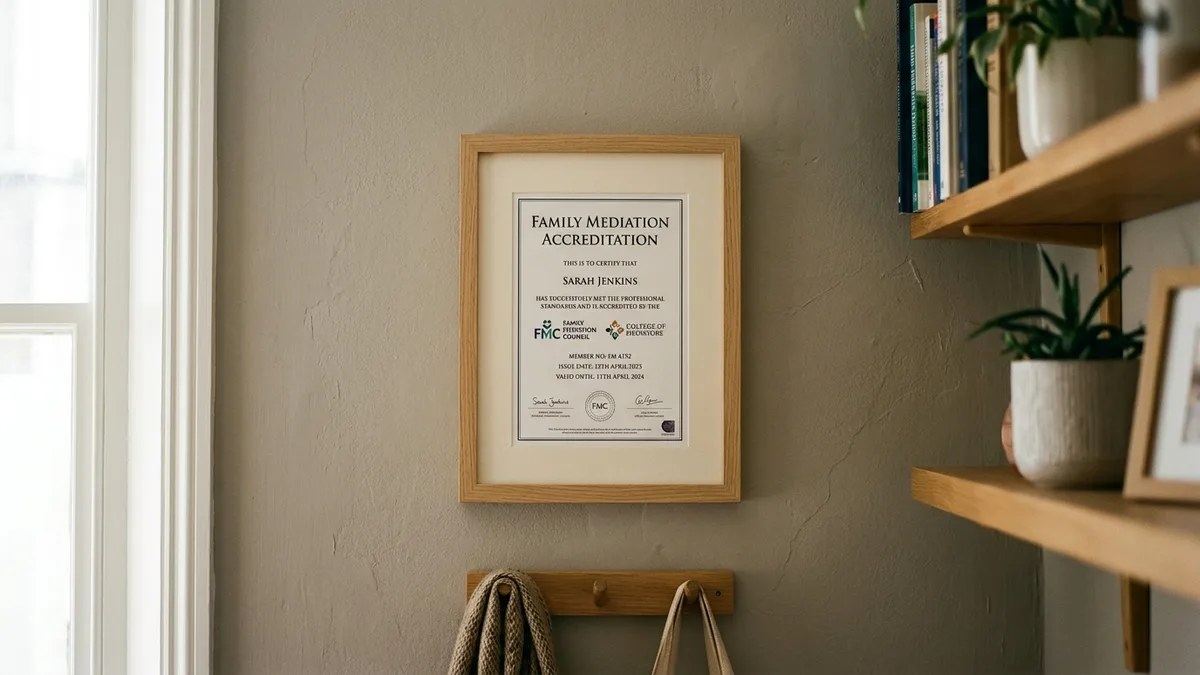
Not every family mediator can do this. Speaking to a child in the context of a family dispute requires a separate qualification and specific approval from the Family Mediation Council on top of full accreditation as a family mediator.
Ask directly whether the mediator holds that approval. It is a reasonable question and anyone who holds it will answer without hesitation.
What happens in the meeting

It is short. Around forty five minutes for most children, less for younger ones, and it happens without either parent present. A child sitting beside a parent is answering to that parent, which is the whole reason for the separate room.
The mediator does not interrogate. Younger children may draw, or talk about an ordinary week, or describe both homes. Older children often talk directly, and frequently about things the adults have not thought to ask: where their belongings are, how they get to see their friends, whether they can carry homework between houses.
There is no recording and no transcript. The mediator takes notes for their own use.
What comes back to you
Only what the child agrees can be passed on. That rule is what makes the whole thing work and it is not negotiable. At the end of the meeting the child decides what the mediator may say and what stays private.
Two exceptions are explained to the child before they start. If a child says something indicating a risk of significant harm, the mediator has a safeguarding duty that overrides confidentiality. And a mediator cannot keep secret something they would be required to report.
Age, and when it is not appropriate
Ten is the usual starting point and it is a guide rather than a rule. Some eight year olds manage it well; some fourteen year olds are too caught in the middle for it to be fair to them.
It is generally not appropriate where a child is already being seen by Cafcass in live proceedings, where safeguarding concerns are unresolved, where a child is showing distress that needs a therapeutic rather than a consultative response, or where either parent is not genuinely willing to hear something they disagree with. That last one matters most: a parent who wants the meeting because they are confident what the child will say is seeking evidence, not a consultation, and a mediator will decline.
Preparing your child
A great deal depends on how the invitation is put. A child told the meeting will decide where they live carries a weight nobody intended. A child told an independent person would like to hear how things are going, and that nothing they say decides anything, arrives in a completely different frame.
Both parents should give the same message. Children notice when two accounts differ, and the mediator will help you agree the words.
What it is not
It is not therapy, and a child who needs therapeutic support needs a different service. It is not an assessment, and the mediator does not form a view about which parent is better. It is not evidence: the whole process is legally privileged and nothing said in it can be used in court.
And it does not give a child the deciding vote. The adults still decide. What changes is that they decide knowing something they did not know before.
Why it is worth doing
The research on this is unusually consistent. Children who are consulted about arrangements that affect them cope better with those arrangements, and they cope better even when the outcome is not what they said they wanted. Being heard and being obeyed are different things, and children understand the difference far better than adults expect.
What holds most parents back is the fear of putting a child in the middle. It is a fair fear, and the structure of the process, with confidentiality resting with the child and the decision resting with the adults, exists specifically to answer it.


 Face to face sessions
 Online and remote mediation
 Evening and weekend appointments