






Why debt needs its own conversation

Debt is the part of a separation people leave until last, and it is the part that follows them longest. A joint loan, a shared overdraft, a credit card in one name that paid for the family, a car on finance that only one of you drives: none of these disappear when a relationship ends, and none of them are divided by agreement between the two of you.
Couples across Aylesbury come to mediation having sorted the house and the children and discovered that the debts are still sitting there, unallocated, accruing.
The rule that surprises people

A joint debt makes both of you liable for the whole of it, not half. That is what joint and several liability means, and it is the single most misunderstood fact in this area.
If one of you stops paying, the lender pursues whoever it can reach. It has no interest in which of you moved out, what the two of you agreed, or what a court later decides between you. An arrangement between you is enforceable between you and is invisible to the lender.
The consequence follows: a missed payment appears on both credit files. Someone who moved out a year ago and assumed they had walked away frequently discovers this when applying for a mortgage of their own.
What mediation can settle
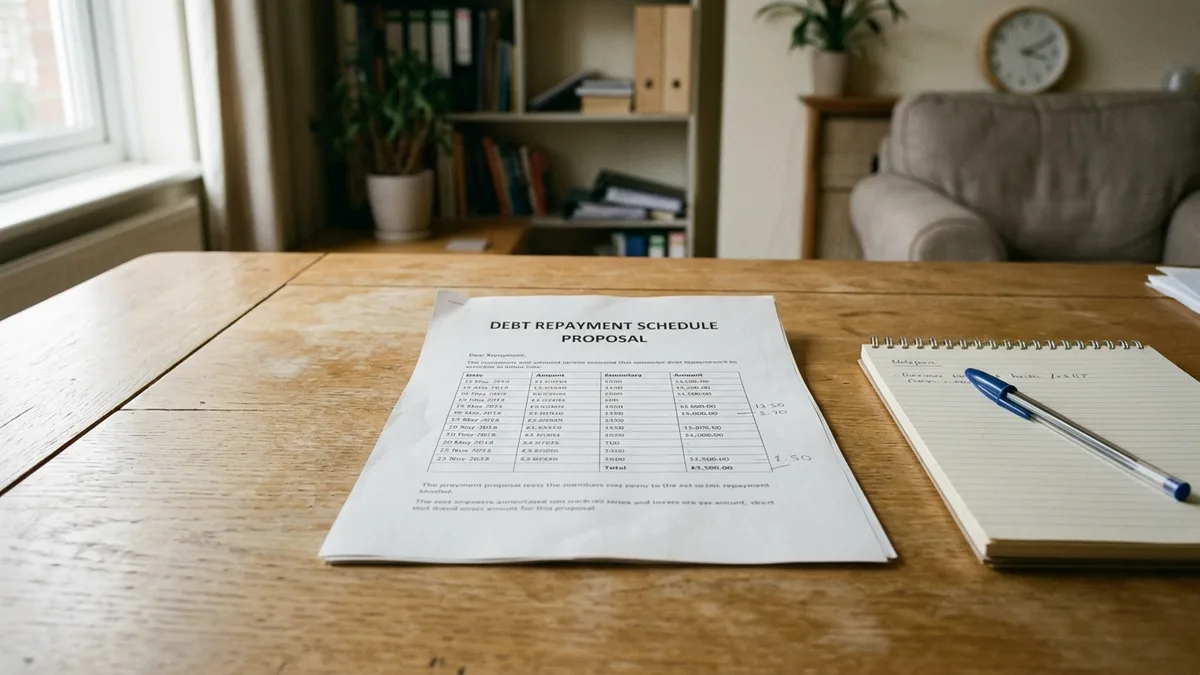
Who pays what, from when, and for how long. Whether a debt is cleared from the sale of an asset or serviced from income. Whether one of you takes a debt on in exchange for a larger share of something else. How a shortfall is handled if there is one. And critically, what happens if the person who agreed to pay stops paying.
All of it is recorded in the memorandum of understanding, and where the separation involves a financial order it goes into the consent order so that it is enforceable rather than merely agreed.
What mediation cannot do
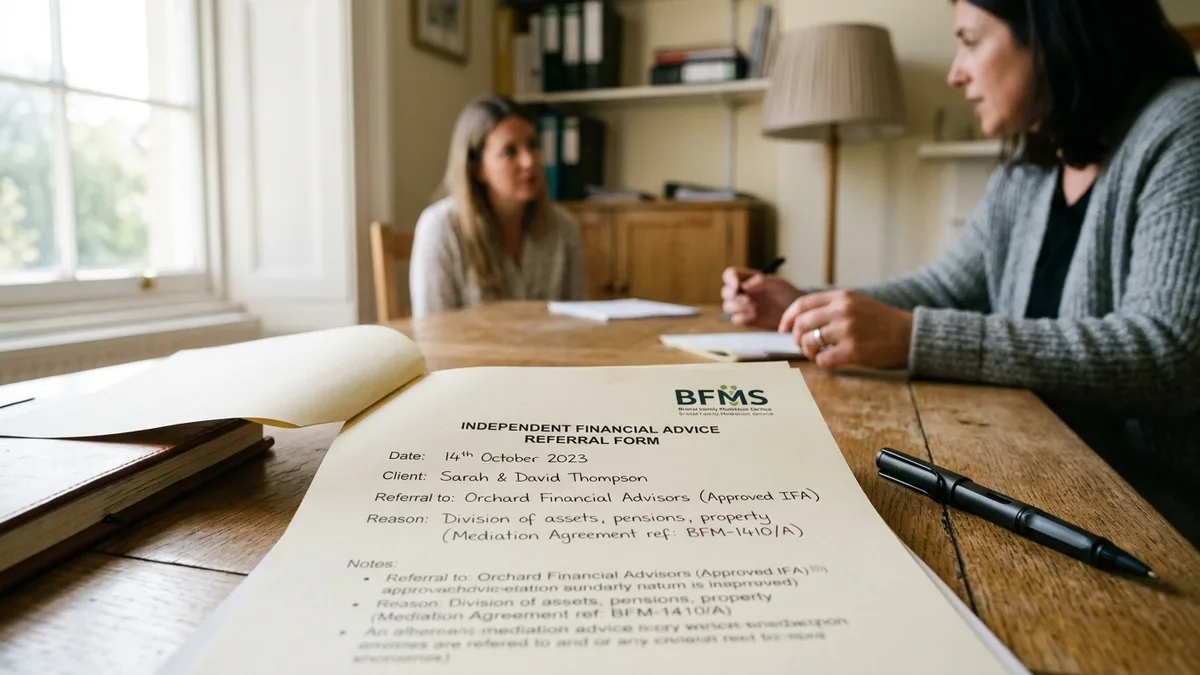
It cannot remove a name from a joint account or a joint loan. Only the lender can do that, and it will only do it if the remaining party can carry the whole debt on their own income.
It cannot stop a creditor pursuing either of you. It cannot write down what is owed. And it is not a substitute for a debt solution where the real problem is that the total is unpayable.
Where the debt is unaffordable

Mediation is the wrong first step when neither party can service what is owed. Free, regulated debt advice comes first, and it is genuinely free: StepChange, National Debtline and Citizens Advice all provide it and none of them charge.
Where a debt solution such as a debt relief order, an individual voluntary arrangement or bankruptcy is on the table, it interacts with a financial settlement in ways that need advice before anything is agreed. A settlement signed just before a bankruptcy can be set aside.
We will say plainly if that is where you are, at the assessment meeting, before you have paid for a process that cannot help.
The order of work
Start with a complete list. Every account, every balance, every monthly payment, whose name it is in, and what it was. Twelve months of statements for each, because a shorter window shows a balance rather than a pattern.
Then check the credit files. Each of you can obtain a statutory report free, and it routinely surfaces an account one of you had forgotten and occasionally one the other did not know about.
Only then start deciding. Couples who list first and negotiate second finish considerably faster than couples who negotiate as each item surfaces.
Debts that are treated differently
Money owed to family sits awkwardly: it is real to the family and rarely documented. It is worth agreeing openly whether it is treated as a debt or as a gift, because a court will look at whether repayment was ever genuinely expected.
A debt run up by one party without the other's knowledge, particularly a gambling debt or one arising from an addiction, is a recognised category. It can be argued as conduct in a financial remedy case, and mediation can address it directly rather than pretending the balance appeared from nowhere.
Business borrowing where one party has given a personal guarantee needs its own attention, because the guarantee survives the separation and frequently survives the business.
What you leave with
A written schedule of every debt, who is responsible for it, and the timetable. Where the case is financial, an open financial statement to take to a solicitor, and a consent order that makes the allocation enforceable between you.
That last point is the one worth paying. An agreement about debt that exists only in a conversation is an agreement that fails the first time one party's circumstances change.


 Face to face sessions
 Online and remote mediation
 Evening and weekend appointments