








What family mediation actually is

Family mediation is a series of meetings with a trained, accredited mediator who helps you and your ex-partner reach your own decisions about children, money and property. The mediator does not take sides, does not give either of you legal advice, and does not decide anything. That last point matters more than it sounds: the agreement you leave with is one the two of you built, which is why mediated arrangements hold up over years far better than orders imposed by a court.
You may be reading this at a point where talking to your ex-partner feels impossible. Most people who come to us feel that way at the start. The structure of mediation exists precisely because direct conversation has stopped working, and a third person in the room changes what can be said and heard.
The four stages, in the order they happen
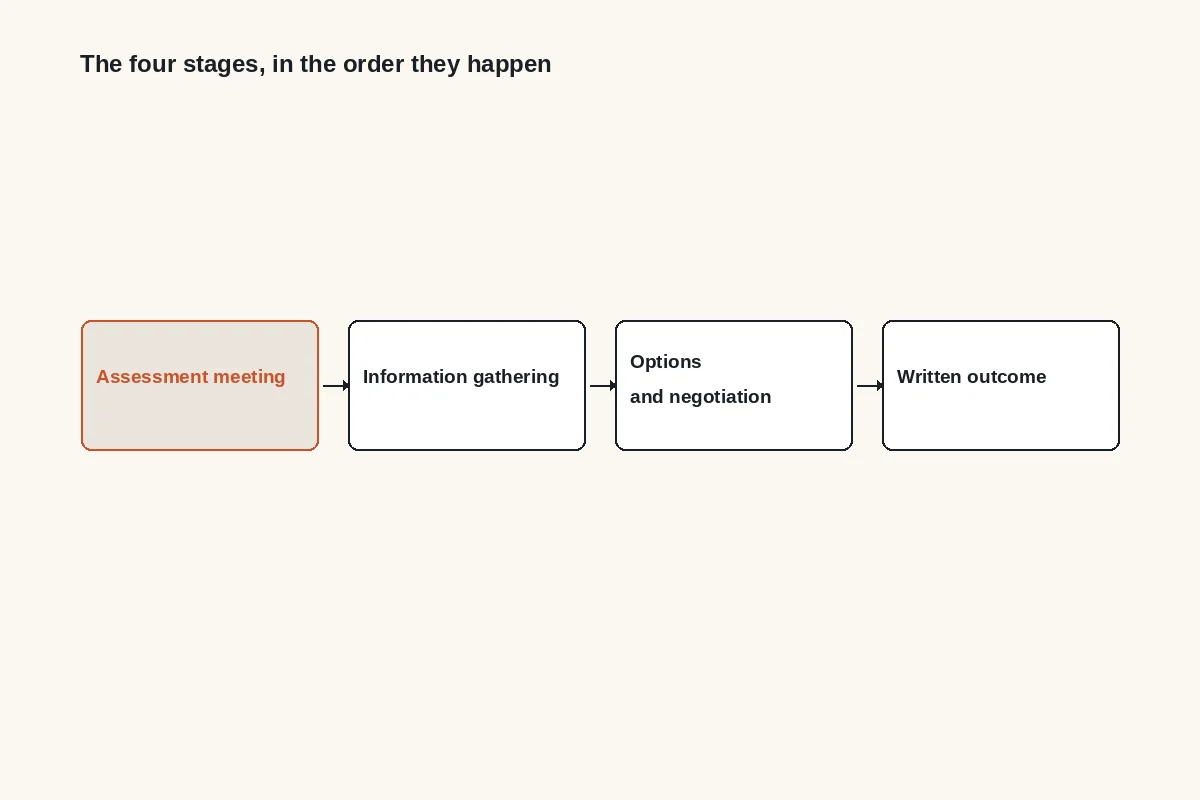
Stage one is the MIAM, a Mediation Information and Assessment Meeting. You attend on your own, it lasts around an hour, and nothing is negotiated. The mediator explains the options and assesses whether mediation is suitable for your situation. Your ex-partner is invited to their own separate meeting. They do not have to attend, and their not attending does not stop yours.
Stage two is the joint sessions. These run around ninety minutes each, either with both of you in one room or shuttled between two rooms if that is easier. Child arrangements typically take two to four sessions. Financial matters take three to five, because disclosure has to be gathered between them.
Stage three is the write-up. The mediator produces a memorandum of understanding setting out what you agreed, in plain language, and for financial cases an open financial statement recording the disclosure the agreement was based on.
Stage four is making it binding, if you want that. The memorandum is not enforceable on its own. A solicitor drafts a consent order from it and files it with the court, and that order is what a judge will enforce.
What mediation covers
Where the children live and how their time is divided. Holidays, birthdays, schooling and handovers. The family home, whether it is sold, bought out or held until the children finish school. Pensions, savings, debts and income. Child maintenance, and where relevant spousal maintenance. Anything the two of you need to settle can be brought into the room.
What mediation does not cover is a finding about who was at fault. A mediator will not adjudicate the history of the relationship, and sessions spent on that are sessions not spent on the arrangements your children are waiting.
Why the court expects you to try it first

Under the Family Procedure Rules 2010, Part 3, a person applying to the family court for a child arrangements order or a financial order must normally have attended a MIAM within the previous four months. The requirement exists because a large share of family disputes settle without a hearing, and the court would rather establish that before listing one.
The practical difference is time. Mediation runs in weeks and you choose the dates. A contested family court timetable runs in months, with hearing dates set by court availability rather than yours. If either of you needs an answer to plan around, that gap matters more than the cost does.
Where mediation is not the right route

We will say so rather than take the booking. Where there has been domestic abuse, mediation is not appropriate and an exemption from the MIAM requirement applies. Where one party will not produce honest financial disclosure, mediation has no power to compel it and a court does. Where an agreement was reached and then ignored, what you need is enforcement rather than negotiation.
Being told at the assessment that mediation is not right for you is not a failed meeting. It is the meeting working. The mediator signs the court form confirming you attended, and your application proceeds.
What you are not obliged to do
You are not obliged to continue. Mediation is voluntary throughout and either of you can end it at any point. What you agreed up to that point is not lost, and choosing to stop is not held against you if you later go to court. You are not obliged to be in the same room. You are not obliged to sign anything on the day; taking a proposal away to think about, or to show a solicitor, is normal and expected.
What it costs, and what help exists
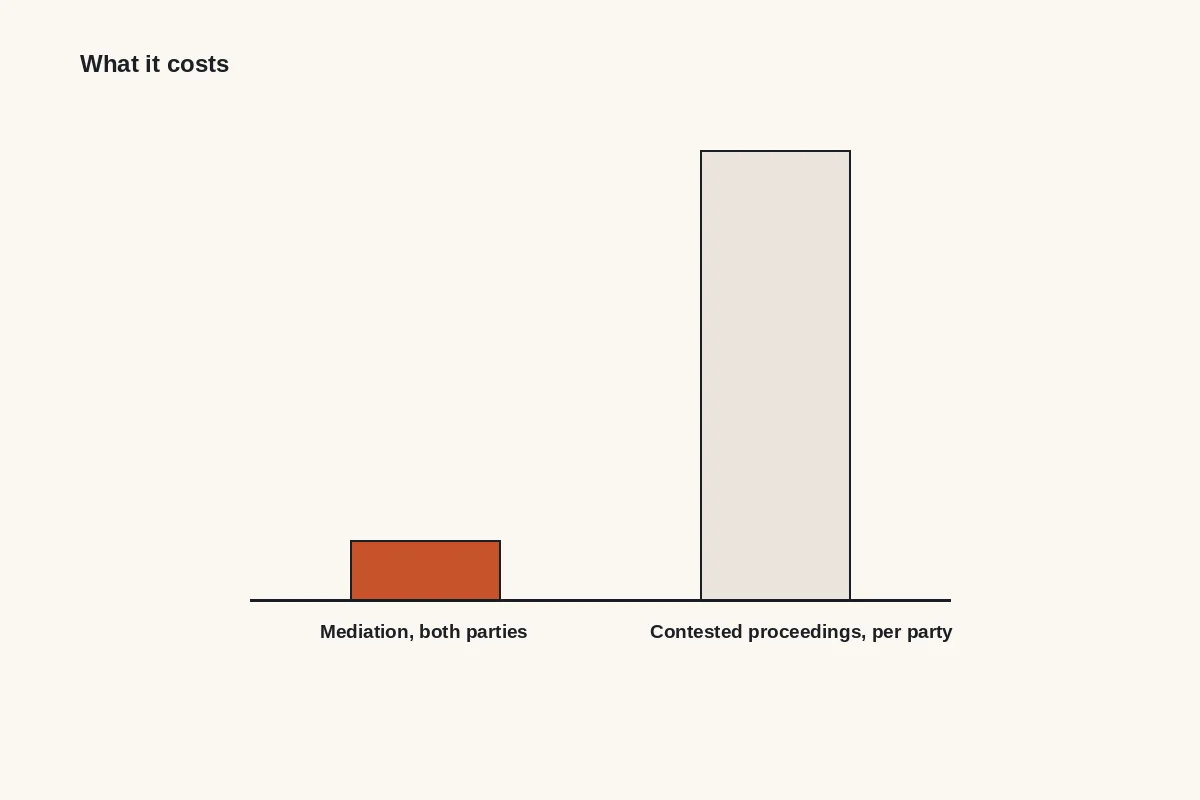
Mediation is charged per session, per person, so a couple splitting the cost pays half each. The MIAM is charged separately as the single meeting it is. Set against a contested financial hearing, which reaches five figures per side once counsel is instructed, the comparison is not a saving of degree.
Two forms of help exist. The Family Mediation Voucher Scheme contributes up to 500 pounds towards mediation where the case involves child arrangements, and it is not means tested. Legal aid remains available for family mediation for those who qualify financially, which is no longer true of most other family legal work. We check both at the enquiry stage, before taking any fee.
What happens in a session, practically
You arrive, or join by video, and the mediator sets out what will be covered. Each of you has time to say where you are without interruption. The mediator then works through the issues one at a time, checking understanding as they go and writing down what is agreed. Nothing is decided by pressure and nothing is signed on the day.
People often expect an argument to be refereed. That is not what happens. Most of the mediator's work is slowing the conversation down enough that both of you hear what the other actually said rather than what you expected them to say.
Shuttle mediation
If being in the same room is not workable, you sit in separate rooms and the mediator moves between you. It takes longer and it works. Nobody should avoid mediation because the thought of facing their ex-partner across a table is unbearable, and shuttle is used routinely rather than as a special case.
Online sessions
Video mediation is now standard and for many families it is easier. It removes travel, it removes the car park meeting, and it makes it simpler to fit sessions around work and childcare. The same accreditation, the same confidentiality and the same paperwork apply.
Confidentiality, and its limits
What is said in mediation is confidential and legally privileged. It cannot be repeated in court, and neither of you can later quote the other's proposals against them. That protection is what makes it possible to explore an option without committing to it.
There are two limits, and we explain both at the MIAM. Financial disclosure is open, not privileged, because a settlement built on figures that could later be denied is worthless. And where a mediator becomes aware of a risk of serious harm to a child or an adult, confidentiality does not hold.
Your options if mediation does not settle everything
Partial agreement is a good outcome and it is common. If you settle the children's arrangements and not the finances, you have removed the most emotionally difficult part from any court process and narrowed what remains. A hearing on two issues costs a fraction of a hearing on ten.
Other routes exist alongside mediation. Collaborative law, where both parties and their solicitors sign an agreement not to go to court. Arbitration, where a private arbitrator makes a binding decision far faster than a court listing. And the court itself, which remains the right answer in the situations described above.


 Face to face sessions
 Online and remote mediation
 Evening and weekend appointments